- Where is Park Szczytnicki in Wrocław located and where does its name come from?
- Main attractions of Szczytnicki Park
- The Japanese Garden – the showcase of Park Szczytnicki
- The wooden church of St. John of Nepomuk
- Arboretum and old trees
- Ponds, footbridges and a gazebo
- Proximity to the Centennial Hall and multimedia fountain
- The microclimate of Park Szczytnicki – where it feels best and where it can be less comfortable
- The most shaded and coolest areas
- The sunniest zones
- Where it can feel damp and cool even in summer
- The windiest places
- How much time should you plan for a walk in Park Szczytnicki?
- Park Szczytnicki – how to explore it wisely and without stress
- Where NOT to start your walk on weekends
- When is Park Szczytnicki the most crowded?
- The most comfortable entrances to Park Szczytnicki
- Walking routes in Park Szczytnicki – simple loops to follow
- Classic loop from Centennial Hall
- Relaxed family route
- Route for runners and “fast walkers”
- The best picnic spots in Park Szczytnicki
- Large meadow near the Japanese Garden
- Shaded clearing by the pond with the island
- Meadow behind the Church of St. John of Nepomuk
- Area by the eastern pond with the gazebo
- Picnic near the Pergola – close to the fountain and ice cream
- What to bring for a picnic in Park Szczytnicki?
- How to get to Park Szczytnicki by public transport
- Park Szczytnicki parking – where to leave your car
- Practical rules: grilling, safety
- Park Szczytnicki with a dog – what to know before your walk
- Where it is most comfortable to walk your dog
- Places best avoided with a dog
- Owner responsibilities and rules
- FAQ – the most common questions about Park Szczytnicki in Wrocław
Park Szczytnicki in Wrocław spans over 100 hectares of greenery between the Centennial Hall, the ZOO and the Zwierzyniecki Bridge. It is a place where, in a single walk, you can combine the historic Szczytnicki Park, a visit to the Japanese Garden, views of the Centennial Hall, as well as peaceful meadows and wild woodland sections.
Where is Park Szczytnicki in Wrocław located and where does its name come from?
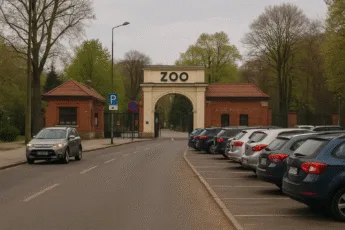
Park Szczytnicki is located in the eastern part of Wrocław, on the so-called Great Island, in the Śródmieście district. It stretches between the Centennial Hall and the Pergola, the ZOO and Africarium complex, the Zwierzyniecki Bridge, and the streets of Mickiewicza, Różyckiego and Kopernika. Its area is approximately 100 hectares, making it one of the largest and most diverse urban parks in Poland.
The name “Szczytnicki” refers to the former village of Szczytniki, which existed here before the area was incorporated into the city. According to historians, the village name comes from “szczyty” – shields produced by local craftsmen known as “szczytnicy.” Over time, the village became a suburban residential area with gardens and small palaces, and later a modern landscape park. Today’s Szczytnicki Park continues this tradition as a place of relaxation away from the city centre.
Main attractions of Szczytnicki Park
If you are looking for more than just a lawn for a picnic blanket, Park Szczytnicki in Wrocław offers several key spots well worth including in your walk.
The Japanese Garden – the showcase of Park Szczytnicki
The Japanese Garden is located on the western edge of the park, between the Pergola and Mickiewicza Street. It was created at the beginning of the 20th century for the 1913 exhibition and, after the flood in the 1990s, was carefully restored in cooperation with Japanese landscape architects. It is a small but meticulously designed space with bridges, pagodas, waterfalls and vegetation typical of Japanese gardens.
The garden is open during the spring–autumn season (usually from early April to the end of October, approximately 9:00–19:00). Entry is ticketed, and the exact ticket prices and e-tickets can be found in the official materials of the Municipal Greenery Authority and on the Garden’s website – prices are updated each season, so it is worth checking them before your visit.
The wooden church of St. John of Nepomuk
In the north-western part of the park stands the wooden church of St. John of Nepomuk, transferred here from the village of Stare Koźle in the early 20th century. The church dates back to the 17th century and is an example of traditional wooden sacral architecture. It is usually closed, but you can freely walk around it, observe the log construction and decorative details. A walk along the path leading from the Japanese Garden towards Parkowa Street almost always passes this spot.
Arboretum and old trees
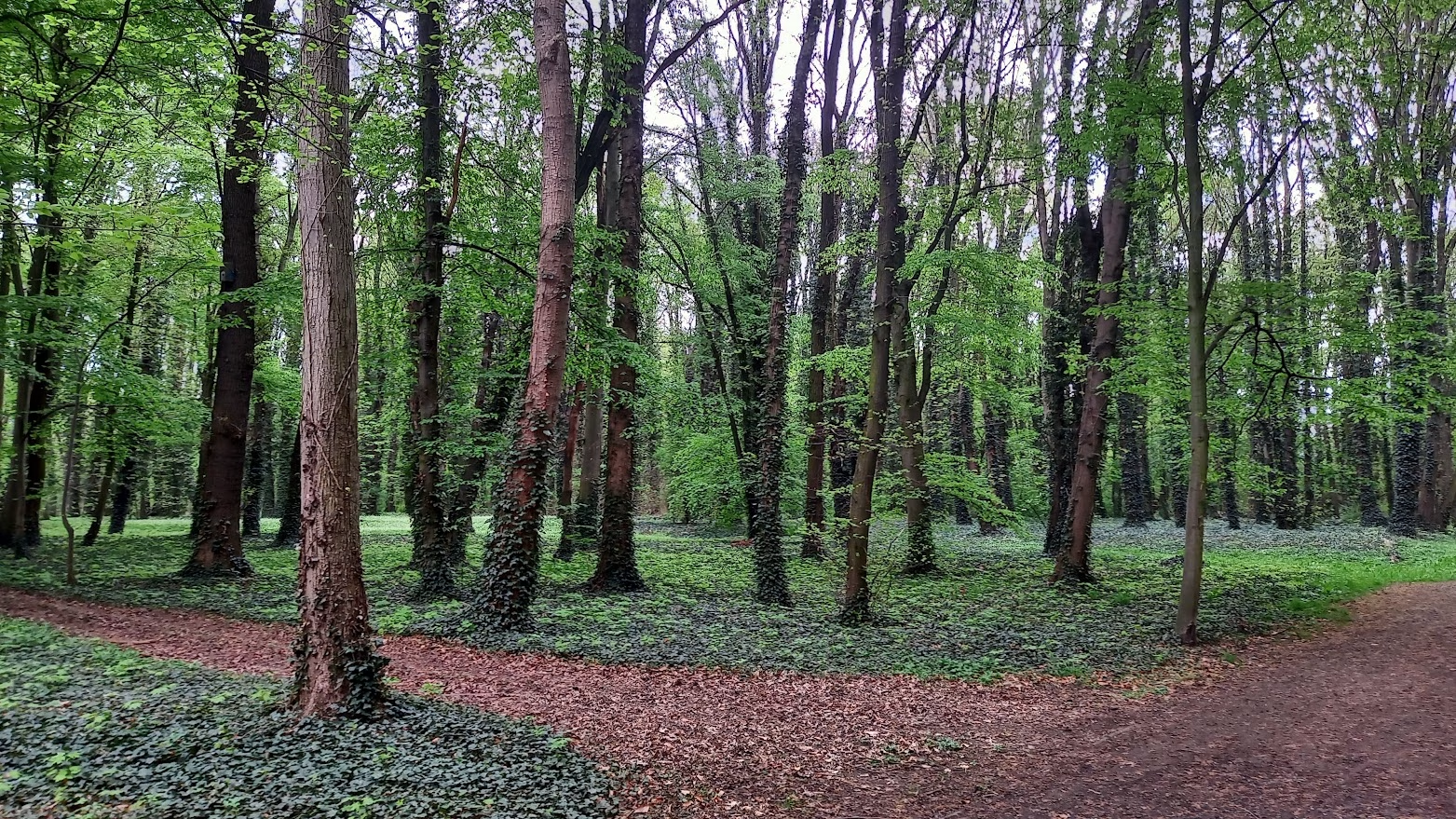
The central part of the park functions as a kind of arboretum. Hundreds of species of trees and shrubs grow here, including impressive oak monuments, ginkgoes, metasequoias and yews. Many are marked with information boards, turning a walk into an educational exploration of plant species. The oldest specimens still remember the times when Szczytniki was a ducal suburban garden.
Ponds, footbridges and a gazebo
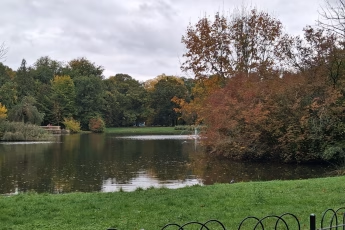
A distinctive feature of the landscape are the two main park ponds. One has an island and a wooden footbridge, while the other features a picturesque gazebo often used as a backdrop for photo sessions. Weeping willows grow around the ponds, and water birds can frequently be seen along the banks. This is one of the most “postcard-like” areas of Szczytnicki Park.
Proximity to the Centennial Hall and multimedia fountain
Right at the western edge of the park are the Centennial Hall and the Pergola with its large multimedia fountain. Water shows take place during the spring and summer season according to a schedule published each year, and access to the area around the fountain is free. It is a natural extension of a park walk – you can start among the greenery and finish with an evening show by the Pergola.
The microclimate of Park Szczytnicki – where it feels best and where it can be less comfortable
Park Szczytnicki in Wrocław is large and varied, which means the comfort you feel changes depending on the part of the park. In practice, it is not one uniform space but several very different “zones” worth knowing before choosing a place for a walk or picnic.
The most shaded and coolest areas
The most shade can be found in the central part of the park – around the ponds, footbridges and paths leading to the church of St. John of Nepomuk. Old trees form a natural canopy here, providing relief even on hot days. This is the best part of the park for a calm, longer summer walk.
The sunniest zones
The most sunlight reaches the open meadows near the Japanese Garden and the Pergola. These are great spots for a picnic or sunbathing, but on hot days they can quickly become tiring – especially in the afternoon, when the sun is at its strongest and natural shade is scarce.
Where it can feel damp and cool even in summer
The areas around the ponds, particularly on the eastern side of the park, are noticeably more humid. After rain, the grass stays wet for a long time, and morning dew often lingers. If you are planning a picnic, it is worth bringing a blanket with an insulating underside.
The windiest places
The most exposed to wind is the open area near the Pergola and the Centennial Hall, where the lack of dense tree cover means gusts are less sheltered. On cooler days it can feel noticeably colder here than deeper inside the park.
How much time should you plan for a walk in Park Szczytnicki?
This is one of the most common practical questions: how much time is needed to visit Park Szczytnicki? The answer depends on whether you just want to walk along the main avenue or take your time by the ponds and stop at the Japanese Garden.
- Quick walk (approx. 60 minutes) – entry from the Centennial Hall side, passing the Japanese Garden, a short loop around the ponds and return towards the Pergola area.
- Standard visit (2–3 hours) – a walk through the main avenues, ponds, the area around the wooden church and a visit to the Japanese Garden, with time for photos and a short rest on a bench or picnic blanket.
- Half a day in the park and surroundings – combining Park Szczytnicki with Centennial Hall, the multimedia fountain, the Japanese Garden and, for those interested, a visit to the ZOO. This option works well as a full-day family outing.
If you are visiting for the first time, it is worth assuming that Park Szczytnicki will easily fill at least two hours, even without the ZOO and long breaks.
Park Szczytnicki – how to explore it wisely and without stress
Park Szczytnicki can be a peaceful oasis, but on weekends and public holidays it can also become quite crowded. A few simple rules will help you enjoy it comfortably, without frustration or unnecessary wandering.
Where NOT to start your walk on weekends
On Saturdays and Sundays, the worst starting point is the Pergola area and the main entrance near Centennial Hall. This is the most crowded spot – filled with tourists, families with children and people visiting the fountain or attending events at the Hall. If you want a calmer experience, it is better to start from the entrance on Różyckiego Street or Parkowa Street.
When is Park Szczytnicki the most crowded?
- Saturdays and Sundays between 11:00 am and 5:00 pm,
- during multimedia fountain shows,
- on days with events and concerts at Centennial Hall,
- on warm, sunny afternoons in spring and summer.
If you want to see the park in a more relaxed atmosphere, the best time is early mornings on weekdays or late afternoons during the week.
The most comfortable entrances to Park Szczytnicki
- Różyckiego Street – quiet and convenient, ideal for a family walk or starting your route near the ponds,
- Parkowa Street – perfect for those who want to see the wooden church and the wilder, less frequented part of the park,
- Mickiewicza Street – representative, but the most crowded on weekends.
If your goal is relaxation rather than “checking off” all attractions, it is best to start from the quieter entrances and only later move closer to the most popular spots.
Walking routes in Park Szczytnicki – simple loops to follow
The park is extensive, but several simple route options make it easy to navigate and see the most important places without getting lost.
Classic loop from Centennial Hall
- Start at Centennial Hall / the Pergola.
- Enter the park near the Japanese Garden (Mickiewicza Street).
- Walk towards the pond with the island and wooden footbridges.
- Visit the area around the wooden Church of St. John of Nepomuk.
- Return along the wide avenue towards the Japanese Garden and Centennial Hall.
This option is ideal for those who want to “feel” the park but do not have the whole day.
Relaxed family route
- Entrance from Różyckiego Street, near the playground.
- Time spent at the playground and nearby picnic lawn.
- Walk to the pond with the gazebo on the eastern side of the park.
- Return via shaded alleys to the Różyckiego exit or continue towards Centennial Hall.
Route for runners and “fast walkers”
For those who treat Park Szczytnicki as a training area, the wide gravel paths between Mickiewicza, Curie-Skłodowskiej and Różyckiego streets work best. A 4–6 km loop allows you to run in the shade of trees while avoiding the most crowded areas near the Pergola.
The best picnic spots in Park Szczytnicki
Park Szczytnicki is one of the most obvious places for a picnic in the city – plenty of grass, mature trees, water and close proximity to attractions. Here are specific locations worth considering.
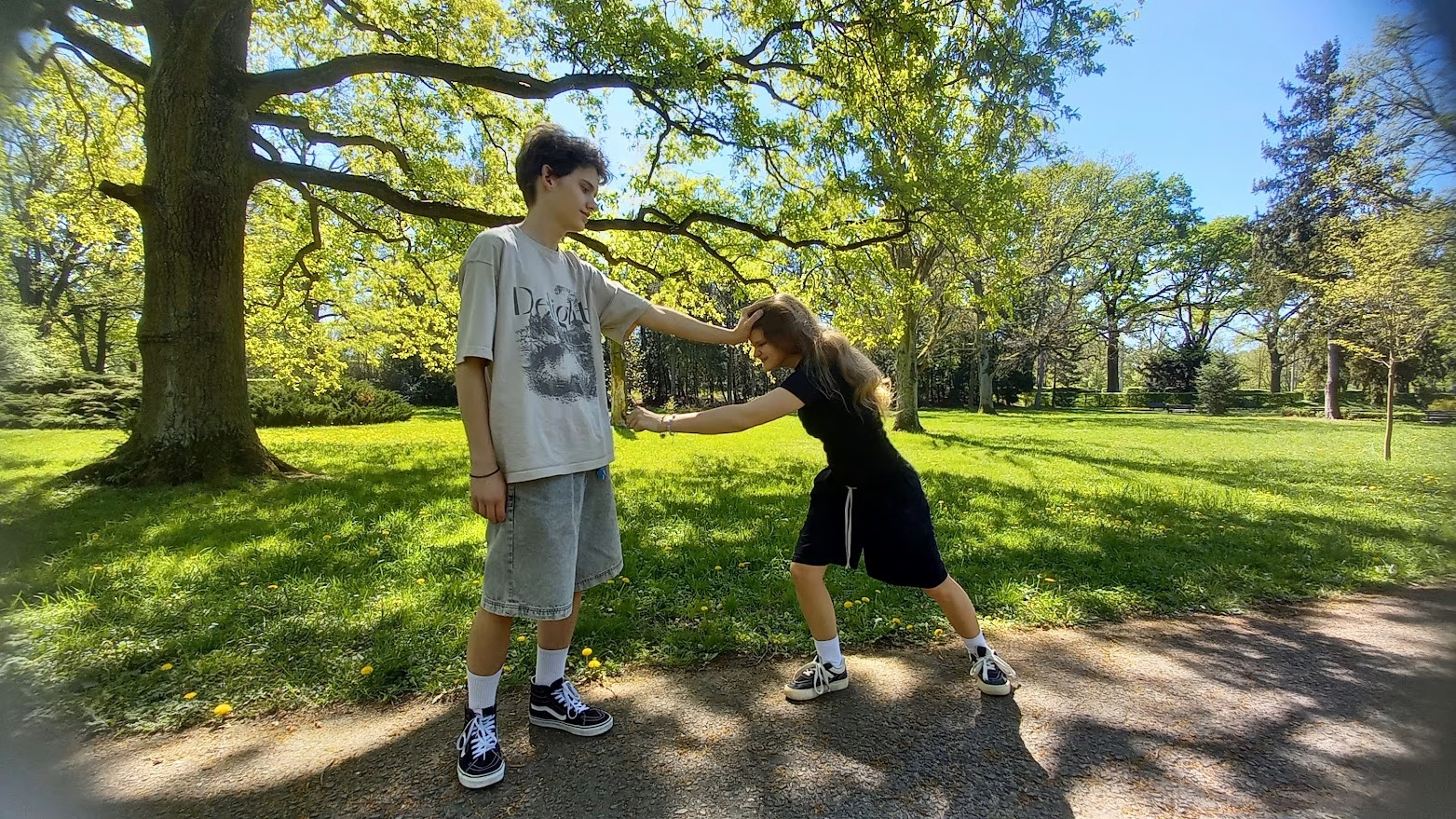
Large meadow near the Japanese Garden
A spacious, even lawn near the entrance to the Japanese Garden from Mickiewicza Street, with a view of the Pergola and Centennial Hall. There is plenty of room here for family picnics, games with children, frisbee or badminton. Nearby, you will find seasonal food stands and toilets by the Hall.
Shaded clearing by the pond with the island
Located deeper in the park, between the pond and the alley leading to the church. It is a great spot on hot days – large plane trees and chestnuts provide natural shade, and the presence of water improves the microclimate. Perfect for a quiet picnic with a book.
Meadow behind the Church of St. John of Nepomuk
A more intimate space in the north-western part of the park. Most people stop near the church along the main path, while the meadow behind it often remains less crowded. A good choice for couples and anyone seeking peace – just remember there are no toilets or bins here.
Area by the eastern pond with the gazebo
Next to the smaller pond on the eastern side of the park stands a wooden gazebo – a popular backdrop for photo shoots. The ground can be damp, but the greenery and calm atmosphere make it ideal for a shorter picnic at sunset.
Picnic near the Pergola – close to the fountain and ice cream
The lawns by the Pergola and the multimedia fountain are a good option for families who want to combine a picnic with attractions. In summer, there are ice cream, drinks and snack stands, as well as city deckchairs. Be prepared for crowds, especially on weekends and during evening shows.
What to bring for a picnic in Park Szczytnicki?
When preparing for a picnic in Park Szczytnicki in Wrocław, it is worth thinking not only about food but also comfort and cleanliness.
- a large picnic blanket with a waterproof base, especially near the ponds,
- water and snacks – there are no shops deep inside the park, food outlets are concentrated near the Hall and the Pergola,
- mosquito and tick repellent,
- a bag or small rubbish sack – bins are available, but not always nearby,
- simple outdoor games (ball, frisbee, cards, a book),
- a hoodie or light jacket – it gets cooler by the water in the evening than in the city centre.
How to get to Park Szczytnicki by public transport
Park Szczytnicki in Wrocław is very well connected with the city centre. In practice, most people get off at the “Centennial Hall” or “ZOO” stops, from where it is just a few minutes’ walk to the park.
Trams – the Centennial Hall and park complex is served by lines 1, 2, 4, 10, 16, and in some cases also 19 (it is always worth checking the current timetable).
Buses – routes such as 115, 145, 146 and others run close to the park, connecting the Hall area with Rondo Reagana and the city centre. Stops may be named “Centennial Hall”, “ZOO” or “Kochanowskiego”, depending on the line.
By bike – you can reach the park via dedicated cycling paths along Mickiewicza and Curie-Skłodowskiej streets. However, there are restrictions on cycling within the park itself (details below), so it is often more convenient to walk your bike once inside and treat it mainly as a means of getting there.
Park Szczytnicki parking – where to leave your car
If you are visiting by car, the topic of Park Szczytnicki parking is worth planning in advance – especially on weekends and during major events at Centennial Hall.
The most convenient option is the parking area at Centennial Hall (ul. Wystawowa 1). It is a large, well-organised car park from which you can reach both the Pergola and the main entrances to Park Szczytnicki within a few minutes. It is particularly useful if you plan to combine your walk in the park with a visit to the fountain or the Japanese Garden.
An alternative is street parking along Mickiewicza and Różyckiego streets. This is a good option if you want to start your walk from a quieter part of the park, but on warm days and weekends finding a free space can take some time.
On days with concerts, fairs and large events at Centennial Hall, the area fills up quickly. In such cases, a sensible solution is to park further away and take a tram for the final stretch – this saves both time and the stress of driving around looking for a spot.
Read also: Where to park in Wrocław
Practical rules: grilling, safety
As in most parks in Wrocław, Park Szczytnicki is subject to several rules based on city regulations.
- Grilling and bonfires – grilling and lighting fires in the park is prohibited. City Guards regularly carry out inspections and information campaigns regarding this ban.
- Alcohol – the consumption of alcohol in public spaces, including park lawns and paths, is prohibited.
- Cycling – cycling is allowed on selected paths and access roads, but in the central part of the park, especially around the ponds and the church, restrictions may apply (no cycling signs). Always follow the signage and, if in doubt, get off your bike.
- Evening safety – areas around Centennial Hall and the main paths are monitored and patrolled, but after dark it is better to stay on well-lit paths and avoid remote, wild sections of the park.
Park Szczytnicki with a dog – what to know before your walk
Park Szczytnicki in Wrocław is generally dog-friendly, but it is worth knowing a few rules and real-life limitations to ensure a comfortable walk for you and other park users.
Where it is most comfortable to walk your dog
The best spots for walking a dog are the side paths and more natural sections of the park, away from the Pergola and the Japanese Garden. Areas near Parkowa Street and the north-eastern part of the park are especially suitable, offering more space and fewer crowds.
Places best avoided with a dog
- The Japanese Garden – dogs are not allowed inside,
- the area directly by the fountain and the Pergola during show times,
- crowded picnic lawns on weekends.
Owner responsibilities and rules
- dogs should be kept on a leash, especially in busy areas,
- cleaning up after your pet is обязательное,
- avoid letting dogs run freely near playgrounds and picnic areas.
Many owners find that dogs enjoy the park most early in the morning or later in the evening – when Park Szczytnicki is quieter and offers more space and fewer stressful stimuli.