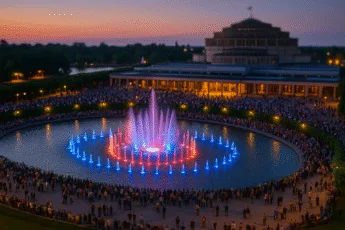
Hala Gwardii on Krupnicza Street is the former New Stock Exchange building – once one of the key trading hubs in 19th-century Wrocław. Today it’s closed and functions more as an architectural curiosity than a place you can actually visit.
Hala Gwardii at a glance
- ? Krupnicza Street, a few minutes from the Market Square and NFM
- ?️ Former New Stock Exchange (1864–1867)
- ⚖️ A meeting place for merchants and international trade
- ? After WWII: “Gwardia” sports hall
- ? Today: closed building, no active function
- ? Worth a quick look from the outside
What is this building?
It’s a former commodity exchange – a place where trade and business life were concentrated in the 19th century. Merchants met here, deals were made, and prices were set, with Wrocław playing an important role in regional trade at the time.
After World War II, the building lost its original function and was converted into a sports hall. For decades, it was used by the Gwardia Wrocław club for training and events.
Today, it no longer serves any public function and remains closed.
What does it look like and what stands out?
From the outside, it’s one of the more distinctive buildings in this part of the city centre. The brick structure, architectural details, and overall scale make it stand out, although it’s easy to miss if you don’t know what you’re looking at.
At the same time, it’s not a place that offers anything in terms of visiting – there’s no access inside, no exhibitions, and no way to explore the interior.
Is it worth going there?
It doesn’t make sense to treat it as a standalone attraction.
It only makes sense in two situations:
- if you’re already in the area (Market Square, NFM, Krupnicza)
- if you’re interested in architecture or the city’s history
In any other case, it’s better to treat it as something you pass by rather than a destination.
How much time does it take?
2–5 minutes. Just a quick stop to look at the building and move on.
What it’s really like
This is one of those places that doesn’t work as an attraction, but helps you understand how the city has changed – from a trading hub, to a sports venue, to an unused building.
If you know that context, this part of the city starts to make more sense. Without it, it’s just another brick building on the street.