- Key spots at a glance
- What to see in the Japanese Garden – highlights along the route
- Sukiya-mon Main Gate
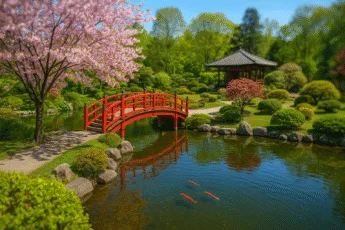
- Yumedono Bashi Bridge (bridge across the pond with pavilion)
- The pond and koi carp
- Onna-daki Waterfall (the calmer cascade)
- Otoko-daki Waterfall (the more dynamic cascade)
- Machiai Pavilion
- Taiko Bashi Bridge (arched bridge)
- Azumaya Tea Pavilion
- Stone lanterns (tōrō) and path details
- Fuku-mon Gate (side gate)
- Best photo spots
In the Japanese Garden in Wrocław, you don’t “tick off attractions” like in a museum — the garden is designed as a sequence of views. The most interesting spots include gates, bridges, waterfalls, pavilions, and the koi pond, all revealed gradually as you follow the walking path. Below you’ll find specific highlights (with the official names of garden elements) and brief tips on where photos usually turn out best.
Key spots at a glance
- Sukiya-mon Main Gate – the symbolic entrance and first framed view of the garden
- Yumedono Bashi Bridge – a bridge across the pond with a pavilion, classic viewing point
- Onna-daki Waterfall – the calmer “female” waterfall along the path
- Otoko-daki Waterfall – the more dynamic “male” waterfall
- Machiai Pavilion – a waiting pavilion along the walking route
- Taiko Bashi Bridge – an arched bridge with some of the best water views
- Azumaya Tea Pavilion – the most recognizable architectural feature
- Fuku-mon Gate – a side gate that closes the walking sequence
What to see in the Japanese Garden – highlights along the route
Sukiya-mon Main Gate
This is where your visit begins and where the garden’s atmosphere is immediately set. Pause here before crossing the first bridge — from this point you can best appreciate the composition of water, greenery, stones, and the guiding path.
Yumedono Bashi Bridge (bridge across the pond with pavilion)
One of the first strong viewing points. This is where plant reflections in the water and the layered greenery — characteristic of Japanese garden design — photograph especially well.
The pond and koi carp
The central pond forms the garden’s main axis. Koi carp are a detail that fascinates children and photographers alike. The best shots are usually taken when the water surface is calm (early morning or on overcast days).
Onna-daki Waterfall (the calmer cascade)
This is a quieter corner where the sound of flowing water stands out. It’s usually less crowded, making it easier to enjoy a peaceful moment and take photos without people in the background.
Otoko-daki Waterfall (the more dynamic cascade)
The second waterfall feels more energetic. Pay attention to the interplay of stones and water — one of the garden’s most characteristic motifs.
Machiai Pavilion
A pavilion along the walking route traditionally associated with waiting in garden design. It acts as a visual pause and helps structure the rhythm of the visit — a good place to slow down and notice the details.
Taiko Bashi Bridge (arched bridge)
The most photogenic bridge in the garden. From the top of the arch, the water appears at a different angle and the perspective of paths and plants looks distinctly “Japanese.” If you want one classic bridge photo, this is usually the spot.
Azumaya Tea Pavilion
The garden’s most recognizable architectural feature. Walk around it slowly and notice how it changes within the frame: sometimes it forms the backdrop to the pond, sometimes it closes the visual axis. Many visitors linger here longer.
Stone lanterns (tōrō) and path details
Lanterns, stones, and carefully shaped greenery are just as important as the larger structures. If you look closely, you’ll see that details are positioned to guide the eye — especially near water and bridges.
Fuku-mon Gate (side gate)
This element closes the walking sequence — the final architectural accent before exiting. It works as a visual “frame” for the entire visit, from the main entrance gate to the side gate.
Best photo spots
- Taiko Bashi Bridge – shots from the arch with water below
- Yumedono Bashi Bridge – reflections on the pond and layered greenery
- Azumaya Pavilion – compositions with water in the background
- Near the waterfalls – stone details and moving water
Tip: the garden is compact, so crowds enter your frame more quickly than in a large park. If you want photos without people, early morning (the first hour after opening) or a weekday visit works best.