- Why visit the Museum of Post and Telecommunications?
- Where is the Museum of Post and Telecommunications located?
- Public transport
- By car and parking
- Opening hours
- Ticket prices
- Special discounts
- Guided tours and educational classes
- Most interesting exhibitions and displays
- History of the Polish Post
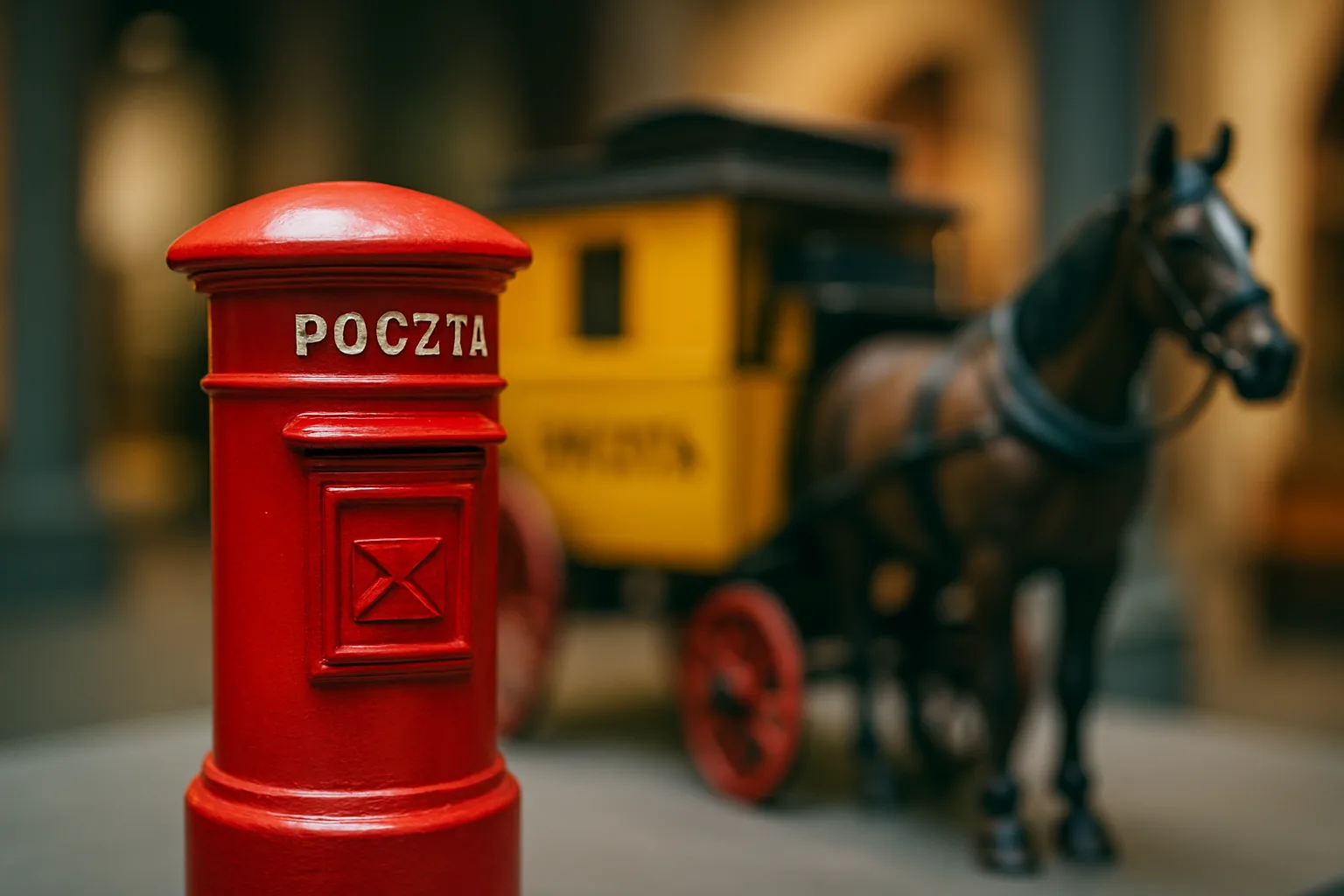
- Postal signs, mailboxes and uniforms
- Horse-drawn postal vehicles – stagecoaches and mail vans
- Philately – stamps from Poland and around the world
- Telegraph, telephone, radio and television
- The museum for families with children
- Practical tips for your visit
- Is it worth visiting the Museum of Post and Telecommunications?
- FAQ — frequently asked questions
The Museum of Post and Telecommunications in Wrocław is the only institution of its kind in Poland dedicated to the history of postal services and the development of communication – from the 16th century to modern times. It’s a great idea for a relaxed visit near the city center, suitable for families with children as well as enthusiasts of history, philately or technology.
Why visit the Museum of Post and Telecommunications?
A visit to the museum gives you a behind-the-scenes look at how people communicated through the centuries — from horse-drawn mail coaches and the first letter boxes, to telephones, radio and television. It’s one of those places often overlooked in a rush, yet undeservedly so — the exhibitions are clear, well-described and carry a distinctly “Wrocław” atmosphere.
- see original 19th-century postal stagecoaches and a mail van from 1925,
- learn about the history of the Polish Post and the development of mail services in Poland,
- explore a collection of Polish and international postage stamps,
- view old postal signs, mailboxes, postman uniforms, post horns and letter scales,
- discover how telephones, radios and televisions evolved throughout the 20th century,
- an excellent indoor attraction for bad weather — most of the exhibition is located inside one building.
The museum is housed in a historic former post office building on Zygmunt Krasiński Street — considered one of the first “high-rise” buildings in Wrocław from the 1920s. The building itself is an interesting example of modernist architecture.
Where is the Museum of Post and Telecommunications located?
Address:
Museum of Post and Telecommunications in Wrocław
ul. Zygmunta Krasińskiego 1
50-954 Wrocław
The museum sits very close to the city centre, between the Market Square and the area around the Racławice Panorama and the National Museum. It’s a convenient stop if you’re exploring this part of the city for the whole day.
Public transport
- tram: lines including 2 and 10 — stop near the Provincial Office (Urząd Wojewódzki),
- bus: city buses stopping at “Poczta Główna” and “Urząd Wojewódzki”.
It’s about a 10–15 minute walk from the Market Square, passing near the Old Town Promenade.
By car and parking
Paid street parking is available nearby, as well as parking spots in side streets leading to Krasińskiego Street. During peak hours it might take some time to find a free spot, so many visitors prefer to walk or take the tram.
Opening hours
Current opening hours:
- Tuesday – Saturday: 10:00 – 16:00
- Sunday: 10:00 – 15:00
- Monday: closed
- Wednesday: free admission for individual visitors (group entry of 10+ people according to the price list)
Last entry is possible 30 minutes before closing.
Opening hours may change during holidays or special events — it’s worth checking current information before your visit.
Ticket prices
Current ticket price list:
- regular ticket: 25 zł
- reduced ticket: 15 zł
- family ticket: 40 zł (valid for 3–5 people, max. 2 adults)
- group ticket: 15 zł / person (min. 10 people)
Special discounts
- Wrocław Senior Card: 5 zł (Sundays only)
- Large Family Card (local and national): 10 zł / person
- people with disabilities: 10 zł
- postal workers: 10 zł
The museum also offers free admission for children under 7, carers of disabled visitors, school/youth group supervisors and selected honorary groups — according to the detailed regulations.
On Wednesdays individual visits are free of charge, which is worth taking advantage of if you prefer a relaxed visit without organised groups.
Guided tours and educational classes
The Museum of Post and Telecommunications is a popular destination for school trips and organised groups. You can book a classic guided tour or themed educational activities.
- guided tour in Polish: 100 zł / group + entry tickets
- guided tour in English: 250 zł / group + entry tickets
- museum lesson – school groups: 80 zł + 12 zł per participant
- museum lesson – preschool groups: 150 zł per group
Guided tours and lessons must be booked in advance. Reservation is available by phone — the number can be found in the “Contact” section on the museum’s website.
Most interesting exhibitions and displays
The museum’s collection is divided into two main areas: philately and the history of post and telecommunications. In total, it contains tens of thousands of objects — from stamps and documents to large postal vehicles.
History of the Polish Post
This exhibition presents the development of postal services in Poland from the late 16th century, through the partitions, the interwar period and post-war years. You’ll find historical documents, postal route maps and equipment used in old post offices.
Postal signs, mailboxes and uniforms
A large part of the display is devoted to elements strongly associated with postal services: letter boxes, official signs and postman uniforms. Among the items is one of the oldest surviving Polish postal signs from the 18th century.
Horse-drawn postal vehicles – stagecoaches and mail vans
A highlight is the room with original late-19th-century mail stagecoaches and a 1925 mail van. This is where you can truly feel the atmosphere of long-distance travel before railways and cars reshaped communication.
Philately – stamps from Poland and around the world
Stamp enthusiasts will enjoy collections of Polish issues and selected international series. One section shows the stamp production process — from design and proofing to final release. Other showcases include rare and visually striking editions, miniature works of art.
Telegraph, telephone, radio and television
Separate rooms focus on the evolution of long-distance communication. You’ll find historic telephone sets, switchboard elements, telegraph devices, radios and televisions from across the 20th century — a journey through the era preceding the Internet and smartphones.
The museum for families with children
Although postal history may sound “serious”, the museum works surprisingly well for family visits. Children are usually most interested in:
- large postal vehicles – stagecoaches and the 1925 van,
- colourful stamps from various countries,
- old rotary-dial phones and early TV sets,
- mailboxes and postal horns.
The museum also offers educational programmes — workshops and lessons that help kids understand how communication looked before smartphones and online messaging.
Practical tips for your visit
- recommended visit time: 60–90 minutes for a relaxed tour,
- best time to go: weekday mornings — usually fewer groups,
- free Wednesdays: a good option for individual visitors who want to save on tickets,
- combine with nearby attractions: easy to pair with the Racławice Panorama, National Museum or a walk towards Ostrów Tumski.
If you’re coming with a larger group (10+ people), be sure to book in advance — it helps avoid queues and tailor the tour or educational activities to the group.
Is it worth visiting the Museum of Post and Telecommunications?
If you enjoy places with history, antique transport, postage stamps, old phones or simply want a less obvious attraction in central Wrocław, the Museum of Post and Telecommunications is an excellent choice. It’s a calm, intimate space that lets you slow down and appreciate communication as a centuries-long technological journey.
Another plus is the reasonable ticket prices, convenient location and free entry on selected days. It’s one of those places that people often leave “for later”, only to discover afterwards that it was absolutely worth adding to the itinerary.